

Press Release
For Immediate Release
Harmony House Annual Forum 2026
Technology and Intimate Partner Relationships: Power, Control and Safety
Harmony House Survey Reveals Over Half of Respondents Have Experienced Technology-Facilitated Abuse (TFA)
Nearly 80% Do Not Know or Are Unsure Where to Seek Help
Calls for Enhanced Public Education, Clear Support Pathways and Stronger Legal Protection
(Hong Kong, 11 November 2026) Harmony House today held its Annual Forum, Technology and Intimate Partner Relationships: Power, Control and Safety, and released the findings of its "Survey on Awareness, Experiences and Support Needs Regarding Technology-Facilitated Abuse (TFA)". The survey found that 57.1% of respondents had experienced at least one form of technology-facilitated abuse or online harassment. While 78% indicated that they would seek help if faced with such situations, 79% reported that they did not know or were unsure which organisations could provide assistance. These findings highlight a significant gap in access to information and awareness of available support services among the public, revealing a phenomenon of "high willingness to seek help but low awareness of available support" among Hong Kong citizens. Harmony House calls for strengthened public education, clearer support pathways, and enhanced legal protection to address this emerging form of intimate partner violence in the digital age.
The survey was conducted between September and October 2026 and collected 205 valid responses. It aimed to understand public awareness, experiences and support needs relating to Technology-Facilitated Abuse (TFA). In recent years, Harmony House has observed through its frontline services that abusive behaviours have extended beyond physical and psychological violence into digital spaces. Examples include forcing partners to share their real-time location, unauthorised access to mobile phones and social media accounts, continuous monitoring through communication applications, and threats involving the distribution of intimate images or the use of artificial intelligence-generated deepfakes. These developments demonstrate that technology-facilitated abuse is increasingly becoming a new form of intimate partner violence.
Public Recognizes the Severity of the Issue, Yet Lacks Confidence in Identifying Abuse
The survey revealed that 94.6% of respondents considered technology-facilitated abuse a serious social issue, while 82.9% believed that it could occur in any relationship. However, more than half (52.7%) lacked confidence in their ability to identify technology-facilitated abuse. The findings suggest that although public awareness of the issue exists, many people are still unable to clearly recognize abusive behaviours and associated risks, underscoring the importance of improving public knowledge and identification skills.
Nearly Six in Ten Respondents Experienced Technology-Facilitated Abuse or Harassment
The survey further found that 57.1% of respondents had encountered at least one form of technology-facilitated abuse or online harassment. The most common forms reported were persistent phone calls or messaging harassment (78.6%), unauthorised access to accounts (35.0%), and online humiliation or threats (23.9%).
Gender differences were also observed. Women were more likely to experience persistent harassment, online humiliation and location tracking, while men were more likely to experience unauthorised access to their accounts. These findings indicate that technology-facilitated abuse can take many forms and affect different population groups in different ways.
Among those who had experienced technology-facilitated abuse, 65.2% reported a reduced sense of safety, 53.9% reported negative impacts on their mental health, and 48.7% reported impacts on their interpersonal relationships. The findings demonstrate that even when physical violence is not involved, technology can become a tool for control, intimidation and harm, causing significant and lasting consequences for victims.
High Willingness to Seek Help but Low Awareness of Available Support
A key finding of the survey is the contradiction between respondents' willingness to seek help and their awareness of support services. While 78% of respondents stated that they would seek assistance when experiencing technology-facilitated abuse, 79% said they did not know or were unsure which organisations could provide support.
Particularly concerning is that all respondents aged 55 or above indicated that they did not know or were unsure where to seek help, highlighting a significant information gap among older adults facing digital risks.
Regarding barriers to help-seeking, 49.3% cited "insufficient evidence" as the primary obstacle, followed by "feeling that seeking help would not be useful" (45.4%) and "not knowing whom to approach for assistance" (43.9%). Many respondents also expressed concerns about retaliation, shame and victim-blaming, causing them to remain silent or endure abuse on their own.
The survey also found that respondents most wanted access to emotional support (61.0%), legal support (57.6%), and device and account security support (53.7%), as well as assistance with content removal and digital safety advice. More than 60% believed that clearer support pathways and increased public education would encourage victims to seek help earlier.
Experts Call for Greater Public Awareness and Digital Safety Literacy
At the forum, Professor Susanne Choi Yuk-ping of the Department of Sociology at The Chinese University of Hong Kong delivered the keynote speech, examining how technology-facilitated abuse manifests through surveillance, cyber harassment, location tracking, non-consensual distribution of intimate images and economic control, making it an emerging form of intimate partner violence.
Professor Choi noted that such abuse affects not only victims’ mental well-being but also undermines their autonomy and interpersonal relationships. She called for enhanced public awareness, stronger legal protection and the establishment of safe and trustworthy support pathways to address intimate partner violence in the digital era.
Another guest speaker, Ms. Rebecca Ho Kan-yeuk, Assistant Privacy Commissioner of the Office of the Privacy Commissioner for Personal Data, discussed the privacy implications of technology-facilitated abuse. She noted a growing number of cases involving the non-consensual sharing of intimate images, illegal location tracking, doxxing and deepfakes, illustrating how technological convenience can coexist with significant risks of misuse. She urged the public to strengthen privacy awareness and adopt digital security measures to safeguard personal data and online accounts.
Harmony House Advocates Three Lines of Defence: Awareness, Protection and Support
Harmony House emphasises that technology itself is not the problem. Rather, concern arises when technology is used to monitor, control, threaten or harm intimate partners. As location-sharing functions, social media, instant messaging platforms and artificial intelligence become increasingly integrated into daily life, forms of digital intimate partner violence are becoming more hidden and sophisticated.
To address these emerging risks, Harmony House advocates the establishment of three key lines of defence:
- Enhancing public education and prevention awareness, enabling the public to better recognise technology-facilitated abuse;
- Strengthening digital safety and privacy protection capabilities, reducing the risk of victimisation; and
- Developing clear, trustworthy and accessible support networks, allowing victims to identify risks early and access appropriate assistance.
Post-Forum Professional Workshops to Strengthen Knowledge and Practice
To further address the challenges posed by technology-facilitated intimate partner violence, Harmony House will launch a post-forum professional workshop series entitled "Invisible Wounds, Strength in Support: Trauma-Informed Intervention for Digital Abuse and Self-Care for Helping Professionals". The workshops are organised by Harmony Academy, a service initiative under Harmony House.
The workshops will be led by Dr. Stephen Mann, Clinical Psychologist and Counselling Psychologist, and Ms. Helen Kwok, Counselling Psychologist. The sessions will explore trauma-informed interventions for digital surveillance and psychological abuse cases, as well as topics such as vicarious trauma, compassion fatigue and self-care for helping professionals.
The workshop series includes:
- Breaking the Invisible Cage: Trauma-Informed Intervention for Digital Surveillance and Psychological Abuse Cases (19 November 2026)
- Finding an Anchor in the Storm: Vicarious Trauma and Inner Restoration for Helping Professionals (10 December 2026)
The workshops aim to equip professionals in the social service, education, counselling and related sectors with a deeper understanding of technology-facilitated abuse and effective intervention strategies, while promoting sustainable self-care and professional resilience. For programme details and registration, please visit:
Harmony House 2026 Post-Forum Workshops
https://docs.google.com/forms/d/e/1FAIpQLScRrsowiIGQD-J-YNWWMVJQcI58nqbu9aL2C7SsmnRhNiBhNw/viewform
About Harmony House
Harmony House established Hong Kong's first shelter for women and children experiencing domestic violence. The shelter provides free emergency accommodation and support services for abused women, their children, and girls aged 13 to 17 who are Hong Kong residents or legally permitted to remain in Hong Kong.
With the support of the Hong Kong Jockey Club Charities Trust, Harmony House also implements the Hong Kong Jockey Club Charities Trust Community Project Grant: Moving Forward Against Domestic Violence Project, which provides preventive and therapeutic services for women and men experiencing family conflict or domestic violence, strengthening individual and family resilience and reducing the occurrence of family violence.
Harmony House operates dedicated hotlines for individuals experiencing physical abuse, psychological abuse, digital abuse or family difficulties:
24-Hour Woman Hotline: 2522 0434
MAN Hotline: 2295 1386
For media enquiries, please contact:
|
Ms. Lydia Law Tel: (852) 2342 0072
|
Ms. Susanna Lam Tel: (852) 2342 0072
|
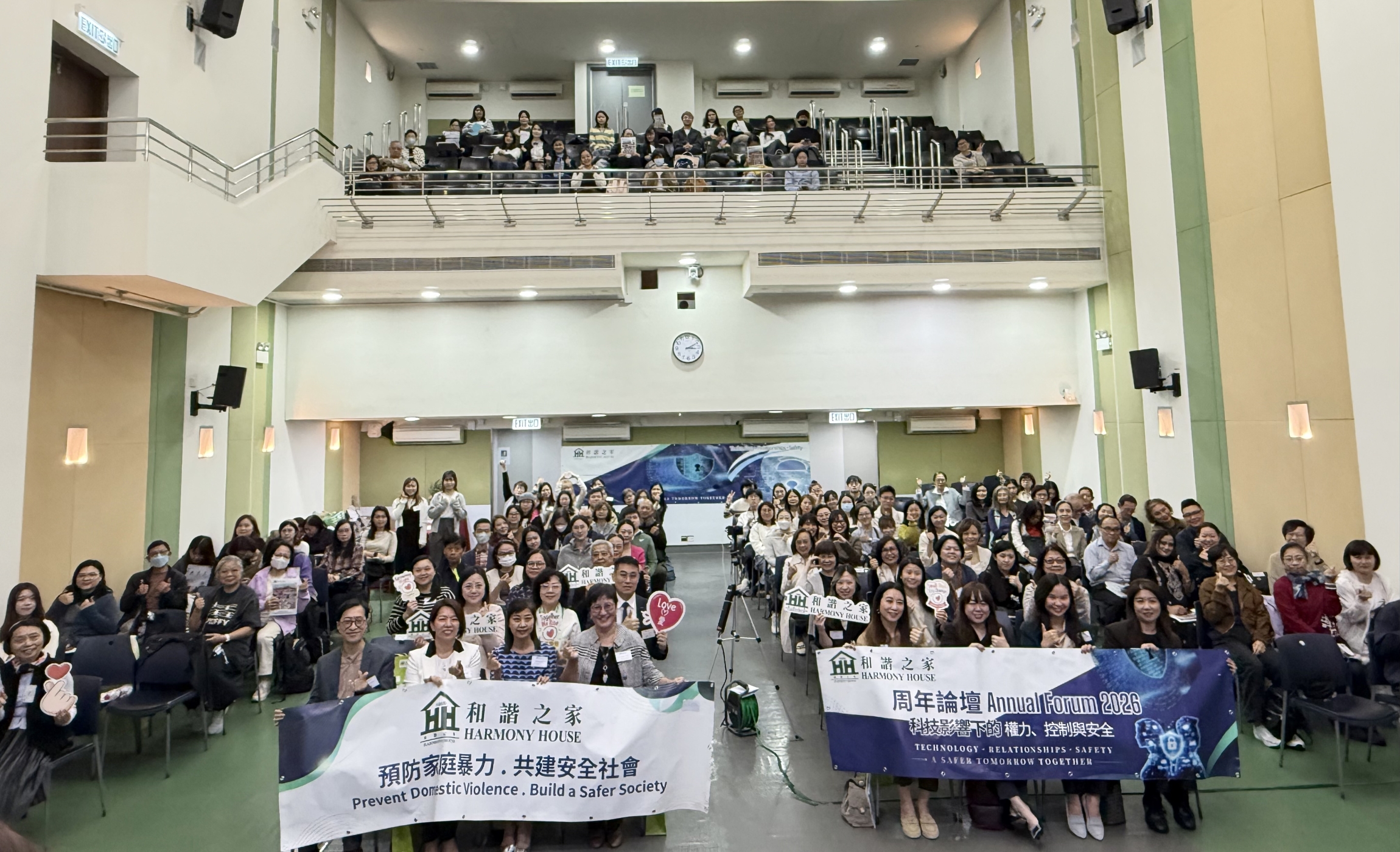
Guests, speakers and professionals from the social service, academic and privacy sectors gathered at the Harmony House Annual Forum 2026 "Intimate Partner Relationships in the Digital Age: Power, Control and Safety" to explore the challenges and responses to technology-facilitated abuse in intimate partner relationships
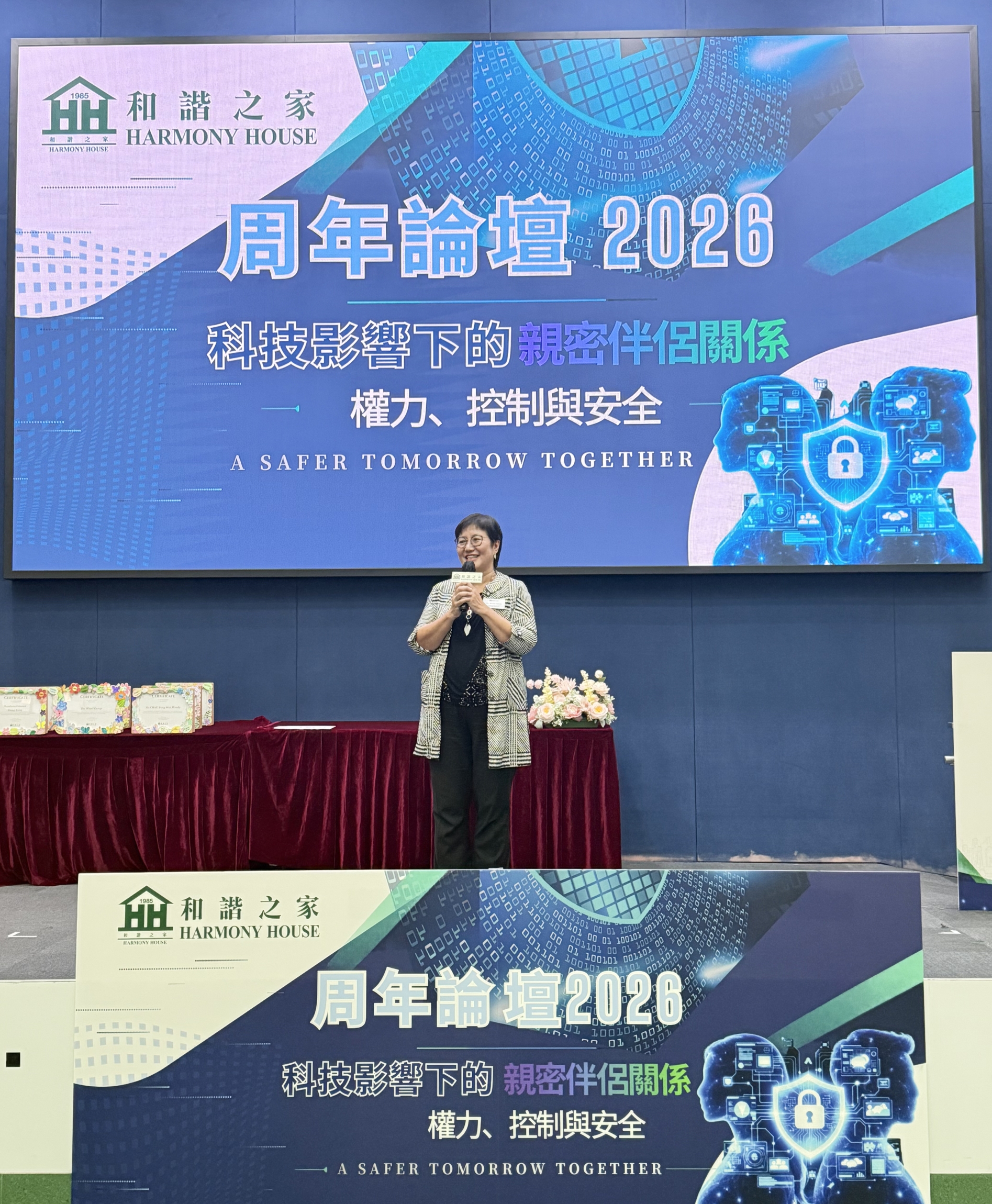
The officiating guest, Ms CHAU Fung-mui, Wendy, Assistant Director (Family and Child Welfare), Social Welfare Department, the Government of HKSAR, delivered opening remarks
Harmony House released the findings of its Survey on Awareness, Experiences and Support Needs Regarding Technology-Facilitated Abuse, providing insights into public awareness, experiences and support needs in Hong Kong

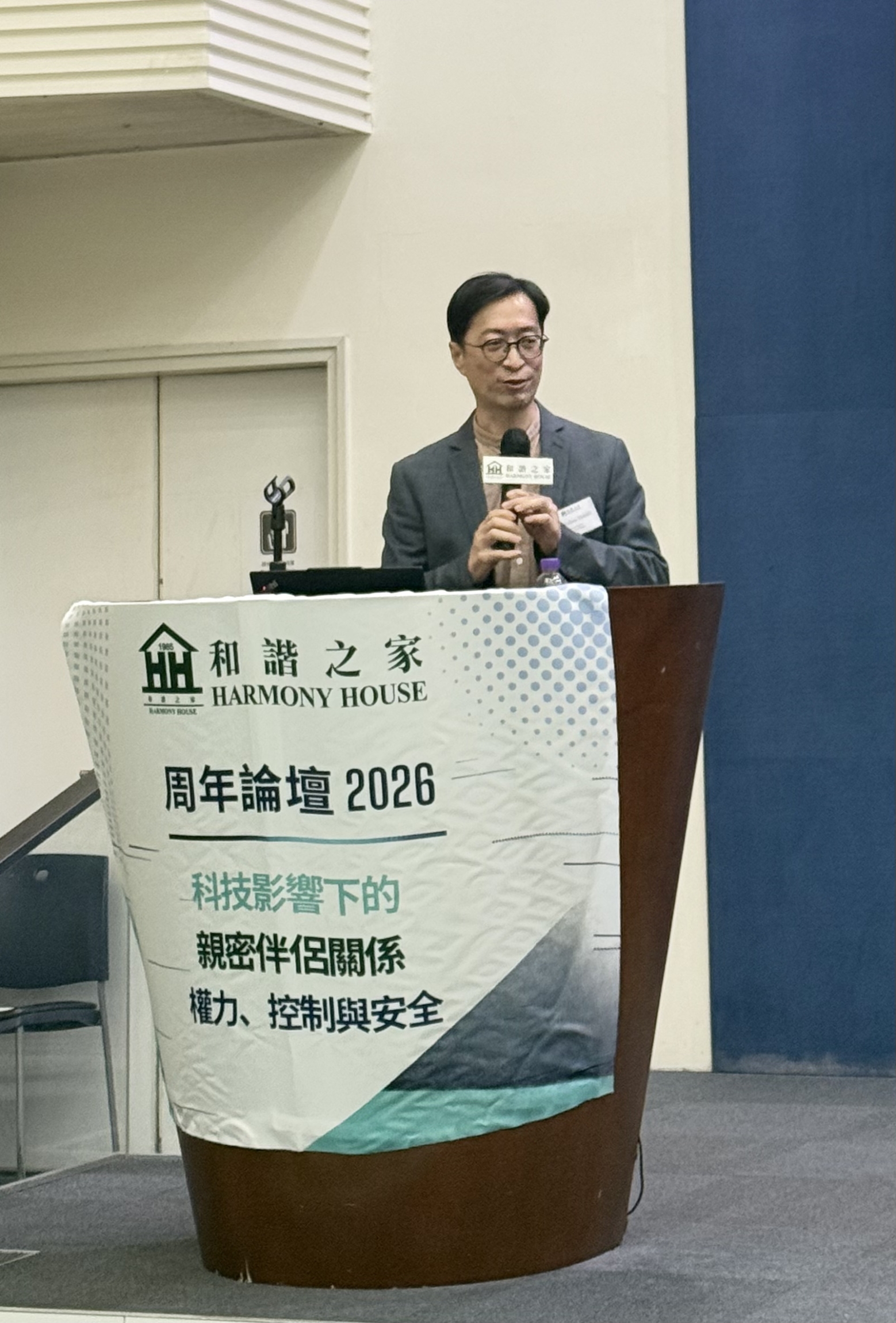
Professor Prof. CHOI Yuk-ping, Susanne, Professor, Department of Sociology, The Chinese University of Hong Kong, shared insights on emerging trends in technology-facilitated abuse, its impact on intimate partner relationships, and possible prevention and support strategies
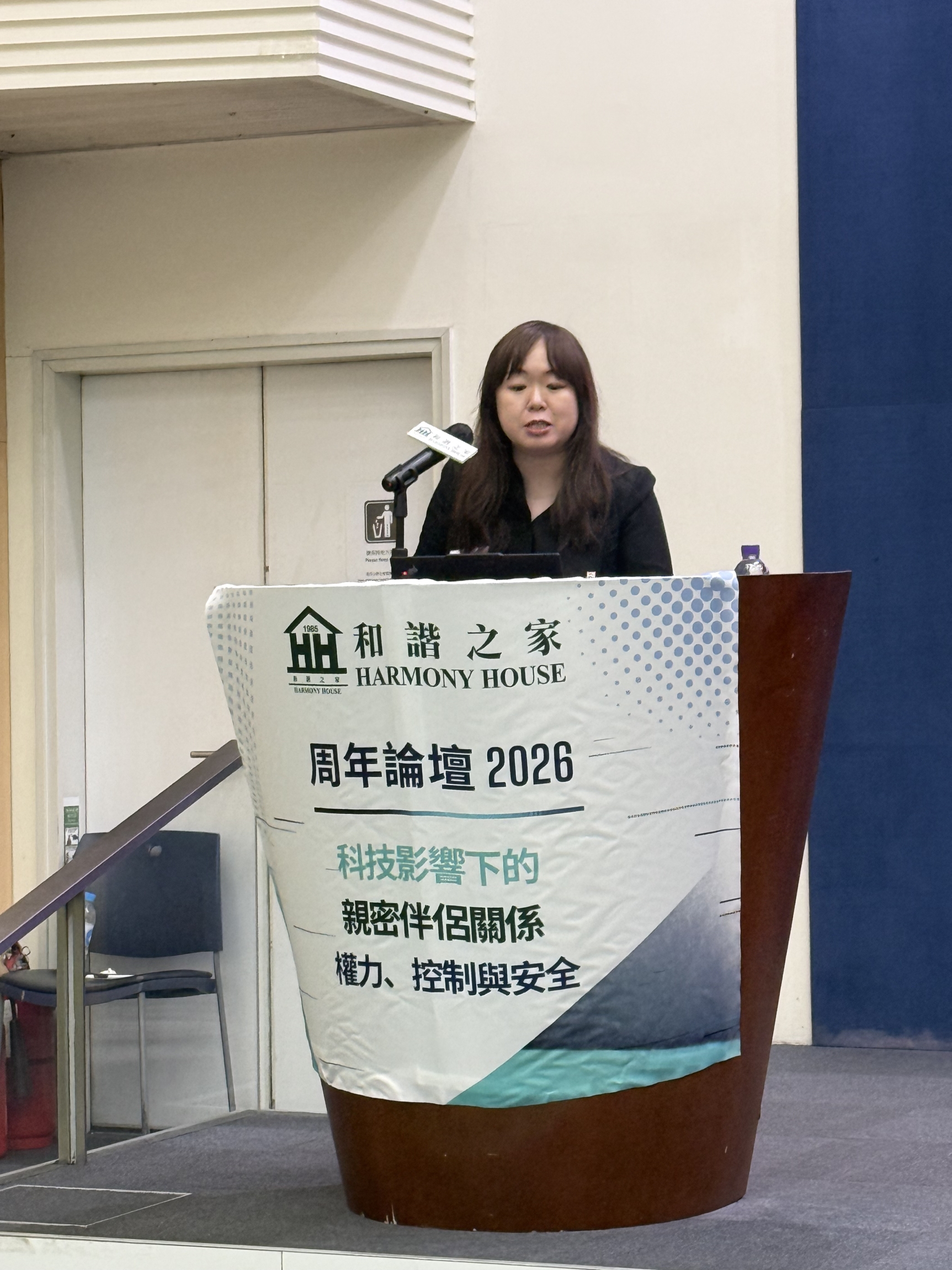
Ms. HO Kan-yeuk, Rebecca, Assistant Privacy Commissioner, Office of the Privacy Commissioner for Personal Data (PCPD), examined the risks and challenges of technology-facilitated abuse from a privacy protection perspective
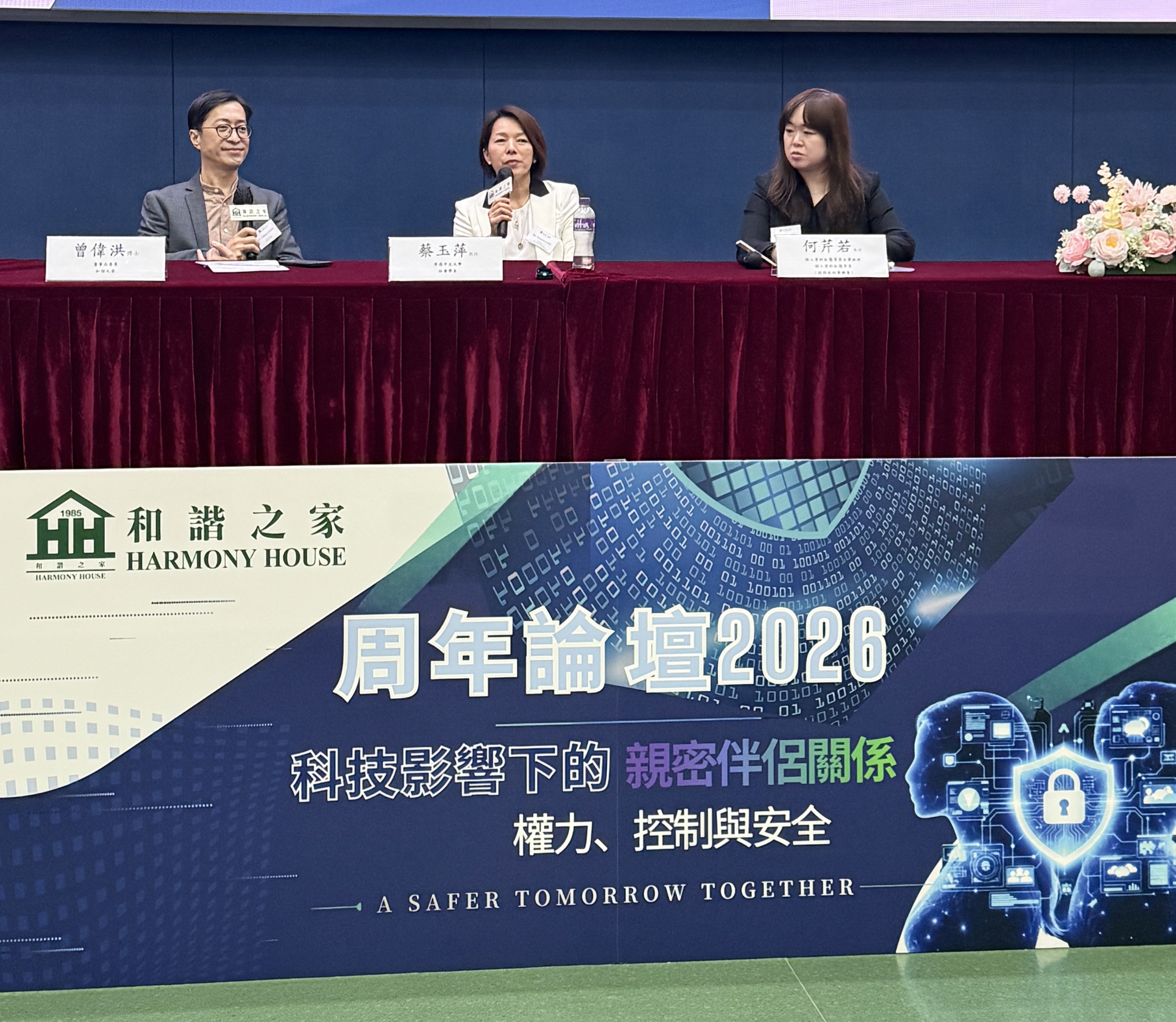
Guest speakers and the forum moderator engaged in an in-depth discussion of questions raised by participants, sharing multidisciplinary perspectives and practical insights